
From Route Chaos to Efficiency: How Rekart’s Water Delivery Management Software Reduces Fuel Waste by 30%
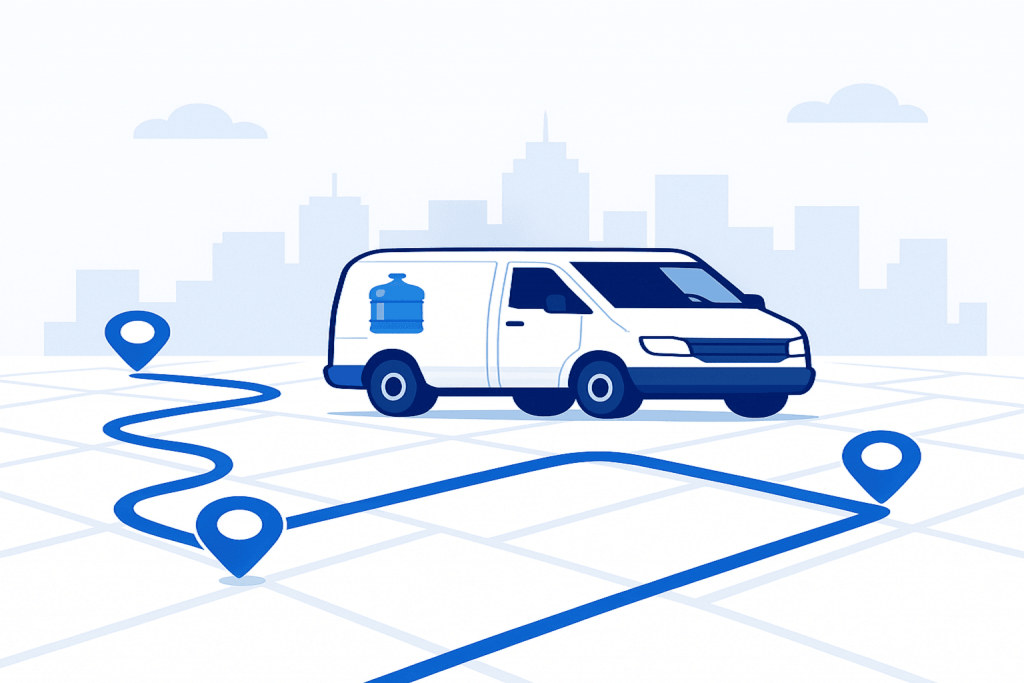
Running a water delivery business looks simple on the surface—pick up jars, drop them off, repeat. But anyone managing daily routes knows the real story: unpredictable traffic, scattered delivery locations, last-minute orders, and drivers following their own judgment instead of a structured path. All of this translates into one major operational leak: unnecessary fuel burn. These small inefficiencies quickly add up, with fuel becoming the biggest invisible cost leak. Manual routing almost always results in zig-zag paths, wasted kilometers, and “empty miles” that drain profits daily. This is where Rekart’s water delivery management software makes a measurable difference, using intelligent route planning and real-time visibility to streamline daily operations and help water delivery companies cut fuel waste by up to 30%.
Why Route Inefficiency Is the Biggest Cost Leak in Water Delivery
Most water delivery businesses don’t realize how much money they lose each day simply because routes aren’t planned efficiently. When drivers take suboptimal paths, travel longer distances, or handle orders in the wrong sequence, fuel consumption spikes immediately. And because water delivery often involves high-frequency stops within tight local clusters, even small routing mistakes multiply into significant daily losses. With fuel being the largest variable expense for most delivery teams, route inefficiency directly eats into margins—more kilometers driven, more time wasted, and fewer deliveries completed per liter of fuel.
The reality of on-ground delivery chaos (traffic, manual decisions, backtracking)
Water delivery routes change constantly—road closures, peak-hour congestion, or unexpected customer requests. When drivers rely on intuition instead of optimized routing, they end up backtracking, taking longer detours, or choosing routes that simply “feel faster.” In reality, these choices usually add hidden kilometers that nobody tracks but everyone pays for.
How poor routing increases fuel burn by 20–40%
Every unnecessary kilometer driven burns fuel that could easily be saved with better planning. A poorly sequenced route might turn a 15 km delivery circuit into 22 km without anyone noticing. Multiply this across multiple drivers, twice a day, and you’re looking at a 20–40% increase in fuel consumption without any increase in revenue. That’s pure operational loss.
High delivery density + low route planning = guaranteed losses
Water delivery businesses operate in dense neighborhoods with repetitive daily orders. This should ideally reduce fuel cost per delivery. But when sequencing is random—and stops are not clustered logically—the business loses the inherent efficiency advantage of high-density operations. The outcome: more distance, more fuel, and more time per delivery, with zero added value.
What Causes Route Chaos in Water Delivery Operations
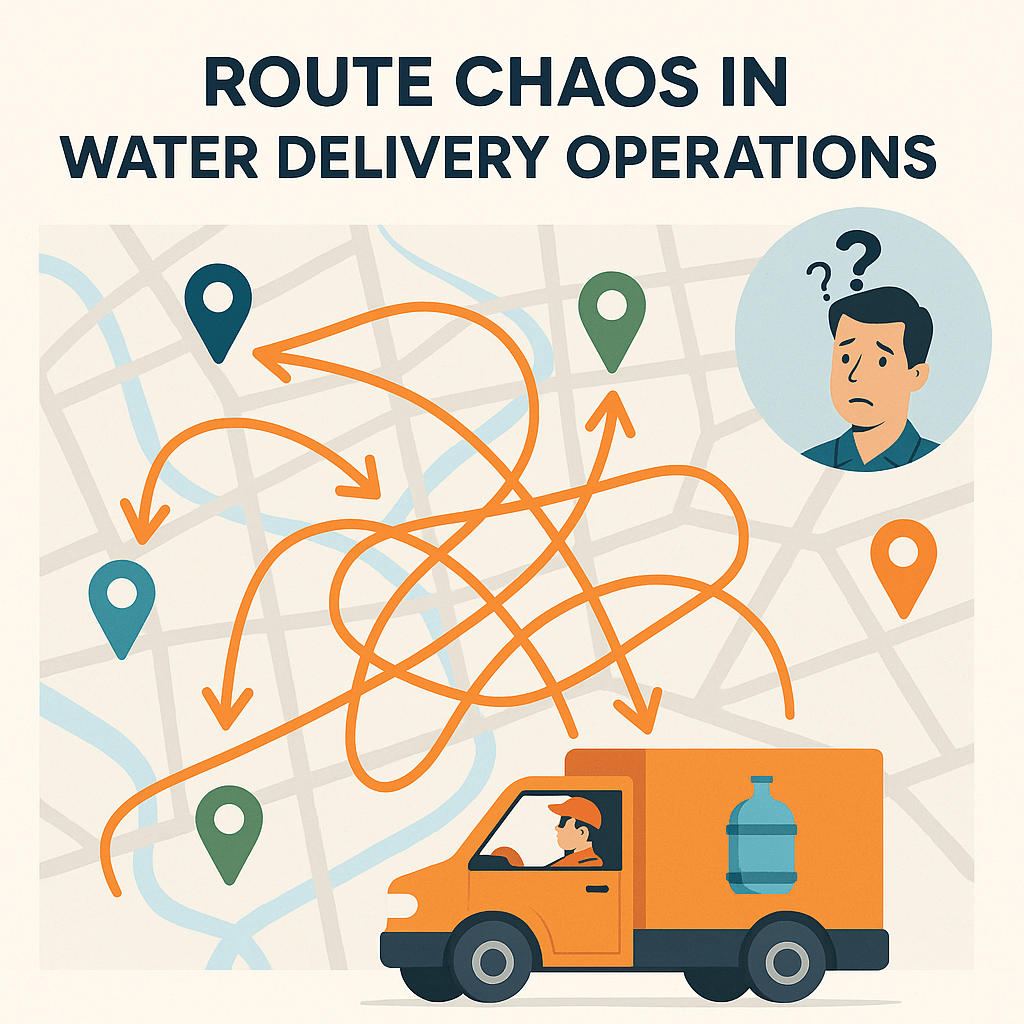
Even the most experienced water delivery teams struggle with predictable routing because the business is inherently dynamic. Daily demand patterns shift, customer locations vary, and schedules change with little notice. When these variables collide without a structured system, you end up with route chaos—drivers taking inefficient paths, dispatchers losing visibility, and fuel being burned on avoidable kilometers.
Drivers choosing their own routes
Most drivers rely on personal judgment, shortcuts, and familiarity to navigate. While well-intentioned, these decisions often fail to create the shortest or most fuel-efficient paths. One driver’s “best route” may add unnecessary distance, overlap with another driver’s zone, or create bottlenecks that slow down the entire day’s schedule.
Unplanned ad-hoc orders mid-route
Water delivery is filled with last-minute requests—extra jars needed at offices, a customer shifting their delivery time, or someone calling in for an urgent refill. Without a system to dynamically adjust routes, these sudden orders force drivers to backtrack or divert significantly, increasing travel time and fuel usage.
Inaccurate or poorly segmented delivery zones
Many businesses group customers manually or by rough geography (“this area is one driver, that area is another”). Without data-backed clustering, drivers end up criss-crossing large zones, moving between far-apart stops, or overlapping with other drivers’ territories—all of which lead to wasted kilometers.
Inefficient order sequencing (zig-zag routing)
When orders are delivered in a random sequence instead of a structured path, drivers often zig-zag across neighborhoods. Even if all stops are close, poor sequencing can multiply travel time. A simple 10-stop route, if sequenced badly, can become a chaotic loop that increases distance by 20–40%.
No real-time visibility for the dispatch team
Without live GPS tracking or route progress indicators, dispatchers operate blindly. If a driver gets stuck in traffic, delays a stop, or deviates from the planned path, the team has no way to correct the route in real time. These micro-inefficiencies accumulate into major operational losses every single day.
How Water Delivery Management Software Fixes Routing Problems
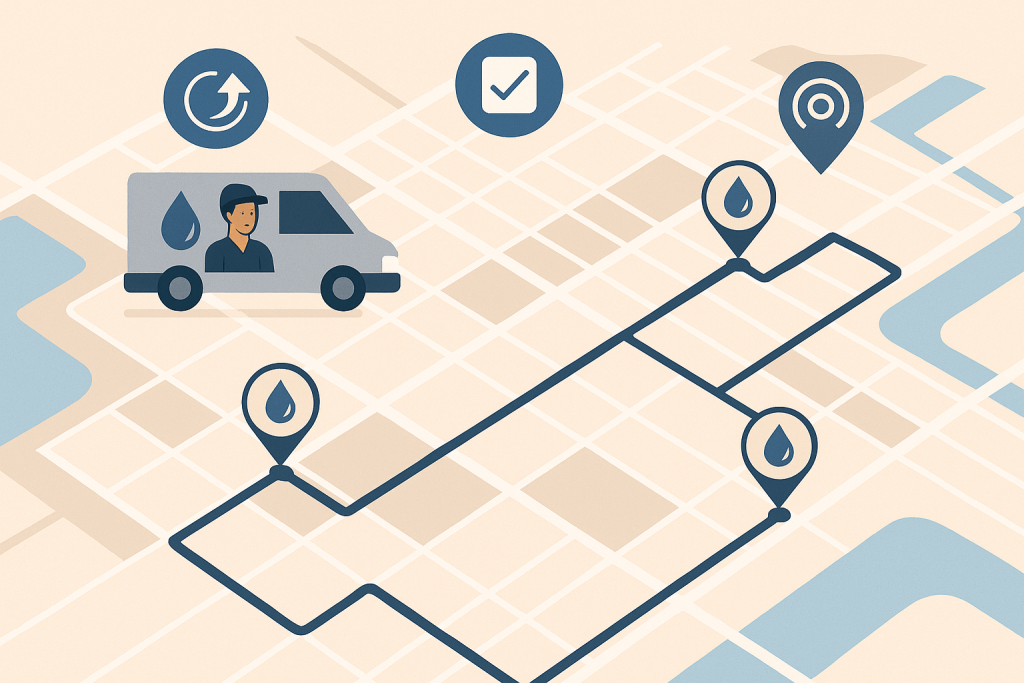
Water delivery management software eliminates routing inefficiencies by replacing guesswork with data-backed planning. Instead of relying on driver experience or manual coordination, the system automatically builds the shortest, most logical path for every driver based on delivery locations, density, time windows, and real-time conditions. This shifts routing from reactive decision-making to predictable, optimized execution—cutting wasted distance and making every liter of fuel work harder.
Automated route sequencing based on location and density
The software intelligently arranges all stops in the optimal order, ensuring the path flows smoothly from one point to the next. By clustering orders within tight geographic zones, it minimizes detours and prevents drivers from hopping across distant neighborhoods. The result: shorter routes, fewer U-turns, and more stops completed per trip.
Real-time GPS tracking with actionable insights
Having a live map of every driver’s route allows dispatchers to step in when needed. If a driver deviates, gets stuck in traffic, or misses a stop, the system alerts the back office instantly. This level of visibility eliminates the traditional blind spots that cause delays and fuel waste.
Smart order clubbing for efficient trips
When multiple orders come from the same building, street, or apartment cluster, the system groups them automatically. Instead of making multiple trips to the same micro-area, drivers complete all nearby deliveries in one efficient loop. This significantly reduces “empty miles” and avoids repetitive backtracking.
Auto-assigning drivers based on route load and distance
The software evaluates each driver’s existing workload, location, and route trajectory before assigning new orders. This prevents scenarios where one driver gets overloaded while another covers larger-than-necessary distances. Orders are distributed in a way that keeps total fleet movement balanced and fuel-efficient.
The Rekart Advantage: Intelligent Routing Built for Water Delivery
Not all route optimization tools are built for high-density, hyperlocal, recurring water delivery operations. Rekart’s routing engine is specifically tuned for businesses that deliver 20L jars, packaged water, or subscription-based water services—where precision, timing, and route predictability directly impact daily profitability. Rekart doesn’t just optimize the path; it optimizes the entire delivery workflow surrounding that path.
Rekart’s location clustering engine
Rekart automatically groups stops based on micro-clusters—streets, apartments, blocks, and delivery pockets—so routes stay tight and predictable. This significantly reduces unnecessary movement and ensures drivers cover the highest number of deliveries within the smallest possible radius.
Fuel-efficient route computation logic
Rekart evaluates distance, traffic patterns, peak hours, and delivery windows to choose the shortest and least congested path. The system is designed to eliminate zig-zag routing, ensuring that every kilometer a driver travels contributes to productive delivery.
Dynamic rerouting during rush hours
If a driver gets stuck in heavy traffic or an unexpected road closure appears, Rekart updates the route on the fly. Drivers receive real-time navigation adjustments, preventing fuel burn during idle time or detours. Dispatchers can also monitor route deviations and intervene when needed.
Order batching built for subscription-heavy businesses
Water delivery involves repetitive, high-frequency orders—daily, alternate-day, or weekly. Rekart’s auto-batching system groups orders smartly so all recurring subscriptions in an area are completed together. This eliminates multiple micro-trips to the same cluster and increases delivery density per route, directly improving fuel efficiency.
Additional Hidden Savings Beyond Fuel
Fuel savings are the most visible win of optimized routing, but they’re only part of the story. When delivery routes become structured, predictable, and tightly controlled, several other operational inefficiencies start disappearing as well. Rekart’s routing intelligence creates a ripple effect across the entire delivery workflow—reducing manual coordination, tightening accountability, and improving overall productivity.
Lower overtime and labor costs
Inefficient routes often force drivers to spend extra time completing their cycles, leading to frequent overtime payouts. With cleaner, optimized routes, delivery cycles finish faster and more consistently, keeping labor hours within planned limits.
Higher driver accountability
Real-time location tracking and predefined routes drastically reduce unauthorized detours, personal stops, or route tampering. Drivers follow a clear, structured path, and dispatch teams get complete transparency.
Fewer missed or delayed deliveries
Missed deliveries often happen because drivers get stuck in traffic, handle orders in the wrong order, or run short on time. With optimized routing and dynamic adjustments, drivers stay on schedule and complete more deliveries without spillover into the next cycle.
Better customer experience with predictable ETAs
When routes are efficient, delivery timing becomes consistent. Customers receive their water on time, every time, reducing “Where is my jar?” calls and improving satisfaction.
Final Thoughts
For water delivery businesses, fuel costs and routing inefficiencies often feel like unavoidable expenses. But they aren’t. The real opportunity lies in transforming daily operations from intuition-driven to data-driven. When routes become structured, clustered, and intelligently sequenced, savings start appearing everywhere—lower fuel consumption, faster delivery cycles, reduced overtime, and happier customers. Rekart’s water delivery management software brings this consistency to your operations, helping your team move smarter, not harder. To see how optimized routing transforms daily operations, you can book a demo with our team. In an industry where margins can be tight and demand is constant, optimized routing isn’t just a tech upgrade—it’s a direct path to sustainable profitability.
